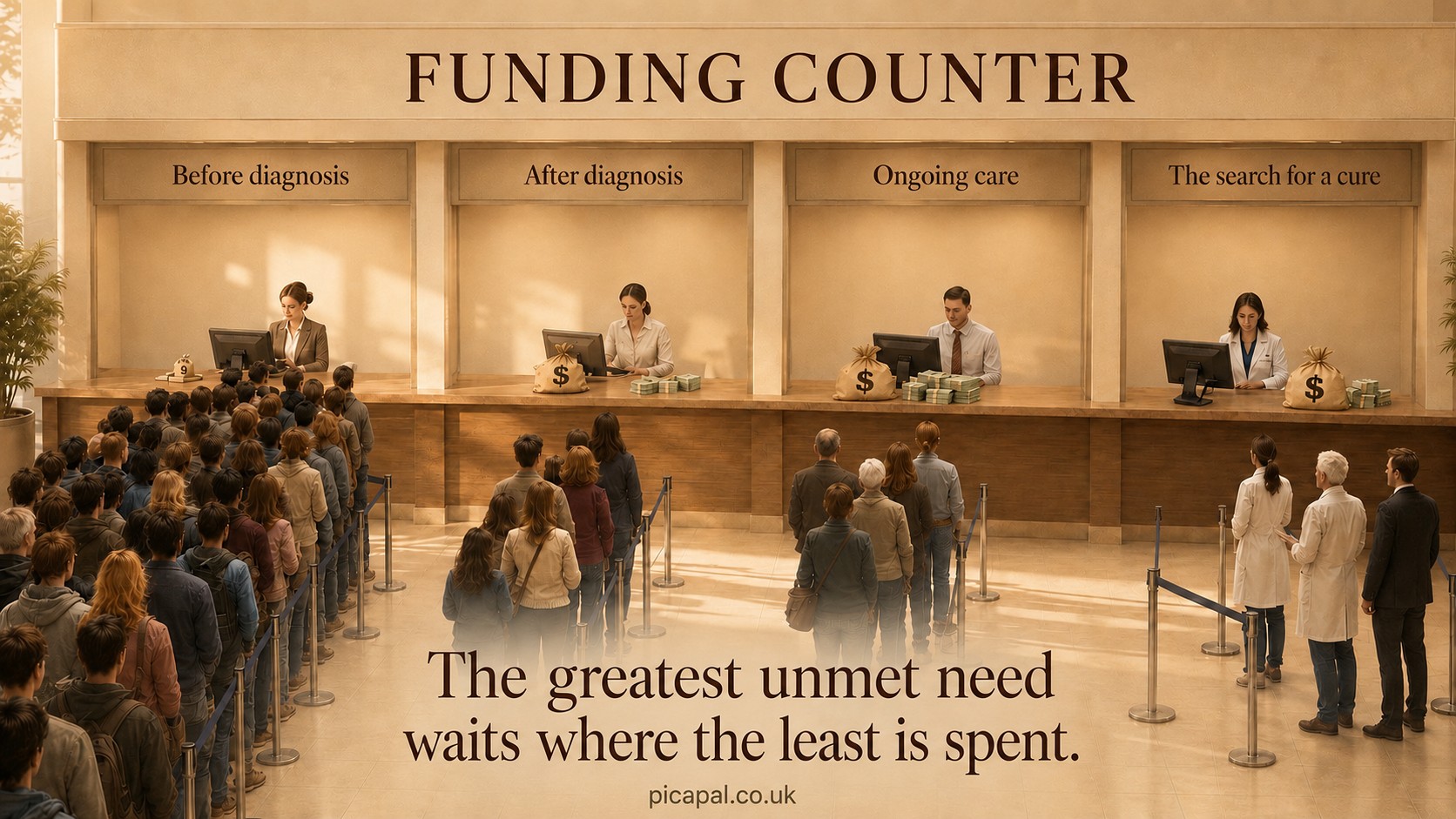
The greatest unmet need waits where the least is spent
There is a stretch of the dementia journey that begins long before any diagnosis.
It is crowded, quiet and under-supported.
On average, it now takes three and a half years from when symptoms are first noticed to a diagnosis (UCL, 2025). Three and a half years in which a person is still at home, still themselves, still holding the thread of ordinary days - with memory or confidence quietly becoming less reliable, and little formal support designed to meet those everyday moments.
That stretch matters.
Just 1.4% of dementia healthcare costs go on diagnosis and treatment (Alzheimer's Society, 2024). The practical support that comes before diagnosis is thinner still. And people living with dementia and their families shoulder 63% of the entire £42 billion annual cost of dementia in the UK themselves.
None of this is anyone's fault.
Funding, understandably, gathers where there is something formal to respond to - a diagnosis, a care package, a trial, a treatment pathway.
The years before that belong to the person and the people who love them, often alone.
I am not asking for a single pound less to be spent on care, or on the search for a cure. Both matter, and I am glad serious people give their time to them.
I am asking a quieter question:
if need begins before the system can formally name it, why does so little practical support begin at this point?
Support that arrives earlier need not add to the load further down the road.
It can ease it.
It can help someone stay genuinely themselves for longer - which is worth a great deal to them, to their family, and to a system already carrying so much.
That is the space PicaPal is being built for.
Help that does not wait.